

ANXIETY IN THE CHURCH
All throughout Scriptures there are several metaphors used to describe the Church; the “Body of Christ,” a “Temple of Living Stones,” “Branches and Vines,” and a “Family” are a few of those descriptions. Metaphorically, the church is depicted in warm and positive ways, a community of Christ followers, a family, a gathering of caring people.
In his book, “How Your 21st Century Church Family Works: Understanding Congregations as Emotional Systems,” Peter Steinke, purports that churches, like a family, are comprised of emotional systems that can show joy, comfort, support, cooperation, and friendship. But as sinful and broken people we can also exhibit bitterness, suspicion, anxiousness, and anger.
God created us in His image and gave humans spiritual, physical, emotional, and social aspects to our being. Just like the body has various systems working together (e.g. digestive system, circulatory system, etc.), the body of Christ has many interrelated emotional systems working in the Church. Steinke goes on to say that “Emotional systems are innately anxious, and intense anxiety can distract from its (God-given) purpose.” (page 1).
Emotions and emotional processes have existed since Creation, and as a gift from God they are not sinful; but many emotional responses can lead to sins such as, not trusting God (1st Commandment), displaying anger toward others (5th Commandment), or lying, gossiping, and forming secret groups (8th Commandment). Steinke warns that ignoring anxiety in the church may bring about discord and destruction, but being aware and responding to these emotions may be a catalyst for the congregation to process the anxiety, learn from the fears and failures, and become more effective in communicating and sharing God’s love and forgiveness with others.
Clinically, anxiety is defined as emotional, psychological, and physiological responses to change or an event characterized by apprehension, worry, and fear that is directed toward the future. A person walking in the woods is afraid when confronted with a bear, they’re anxious when they are worried about the bear they may encounter on their walk through the woods. Steinke describes two types of anxiety, acute (situational) and chronic (habitual); “someone has anxiety if acute – some is their anxiety if chronic.” (page 23).
Understanding the effects of anxiety can be helpful for building communication and focusing on issues and needs of the congregation; anxiety can often cause an increase in:
- Reactionary approaches to situations or people
- Resorting to “triangulation” (talking to others indirectly by involving another person)
- Rigidity (“stuck in rut”) and black & white thinking
- Hyper focusing and “nervous” energy
- Polarity, isolation, and tension
Anxiety can also cause a decrease in:
- Ability to discriminate or differentiate
- Willingness to change or courage to confront
- Ability to get a clear (objective) view the current situation
- Vision for the future
Individually and collectively, we walk by faith, not by sight (2 Corinthians 5:7); we place our trust, hopes, fears, and failures in God’s hands. By the gift of the Holy Spirit our faith is nourished and strengthened by His Word and Sacraments. By faith we acknowledge our sins, repent and we receive forgiveness, life, and eternal life. Through the prophet Isaiah, God promises us…
“When you pass through the waters, I will be with you; and through the rivers, they shall not overwhelm you; when you walk through fire you shall not be burned, and the flame shall not consume you.” Isaiah 43:2
God repeatedly told His people that He is with them and that they should not be afraid (Joshua 1:9); even when they are facing unknown territory of entering the “Promised Land.” God demonstrated His love for us by creating the world and by sending His Son to redeem the world…
“And the Word became flesh and dwelt among us, and we have seen His glory, glory of the only Son from the Father, full of grace and truth.” John 1:14
We trust that God will continue lead and send His Spirit to help us navigate, balance, and positively use our emotional forces. With His wisdom and patience, we can discern and differentiate issues, concerns, and anxiety about the future. By His strength we can walk into uncharted territory with confidence and integrity for the glory of God and the continuation of His kingdom work in and through us.
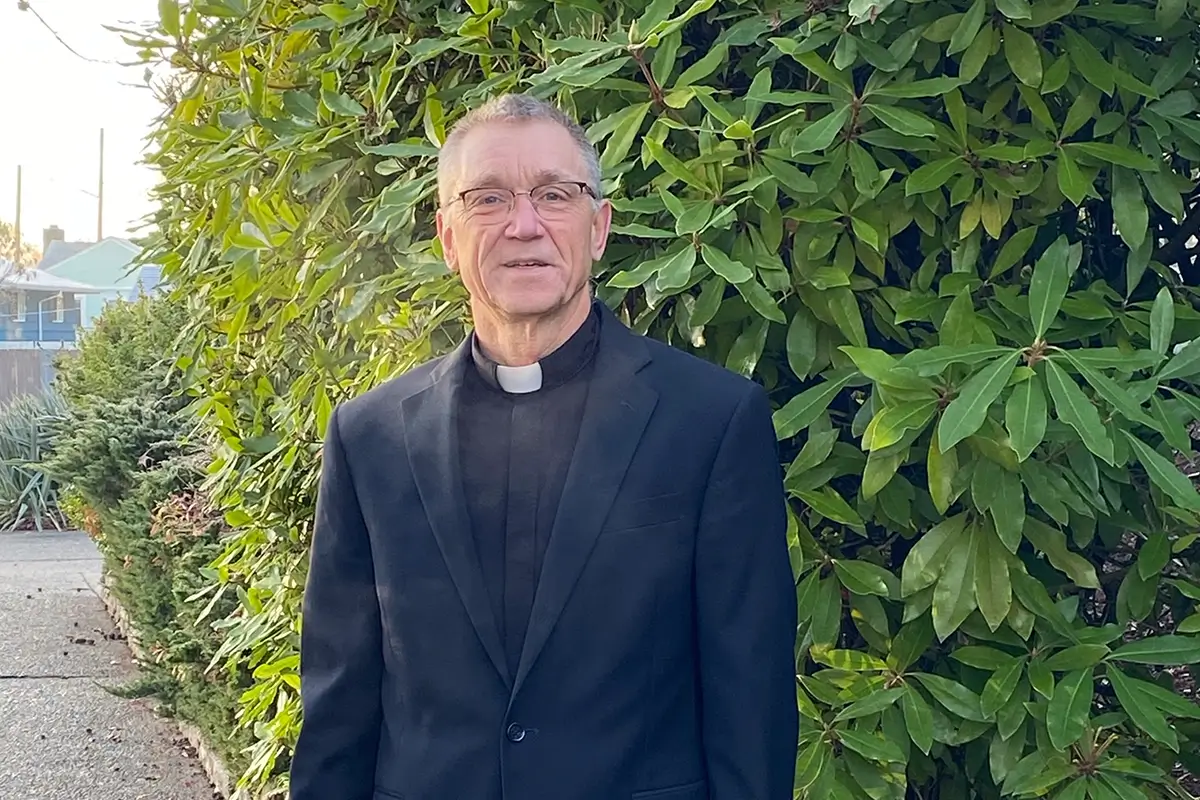
Pastor Schuldheisz
OUR RESOURCES
